Examining Referee Assignment Trends and Their Correlation with Penalty Prop Outcomes in Hockey Wagering Markets
Written by Morgan Perry · Nov 21, 2026
Examining Referee Assignment Trends and Their Correlation with Penalty Prop Outcomes in Hockey Wagering Markets
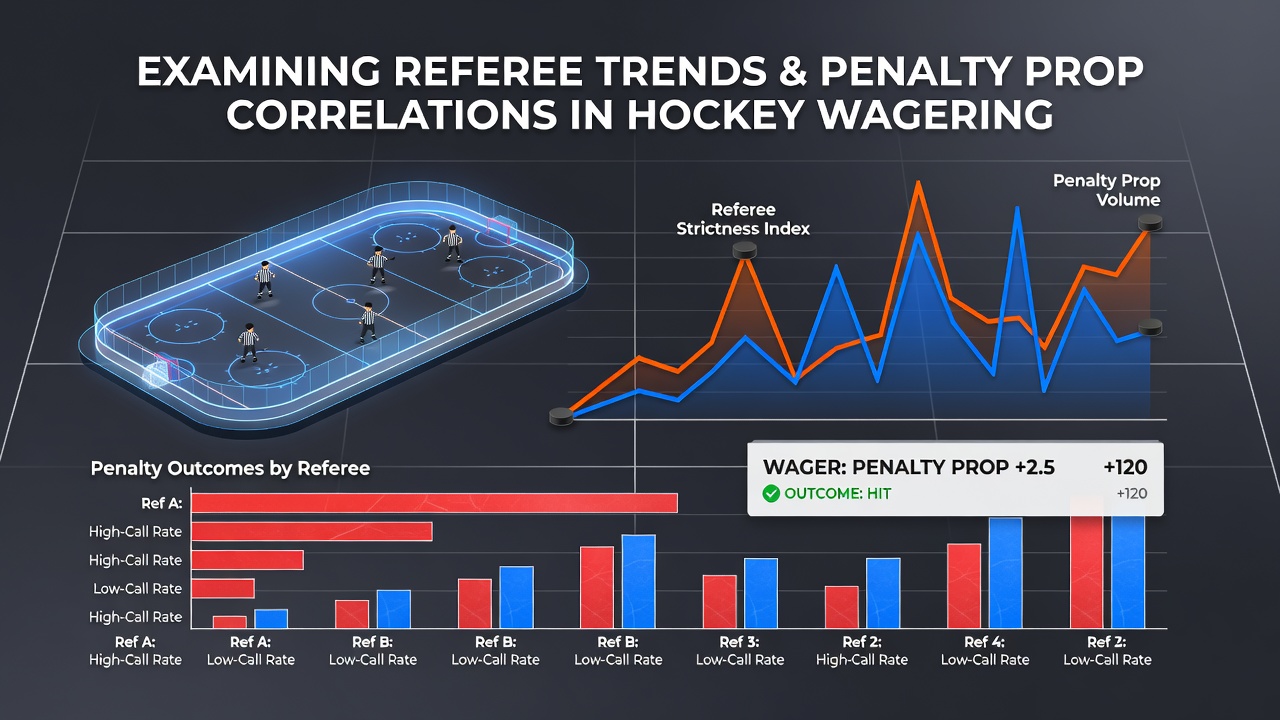
Referee assignments in professional hockey create measurable patterns that influence penalty prop markets, and analysts track these trends across multiple seasons to identify statistical relationships. Data from league records shows that certain officials issue minor penalties at rates 12 to 18 percent above the league average, while others maintain stricter consistency on major infractions. Bettors who monitor these assignments gain access to historical datasets that link individual referee profiles to over-under totals on penalty minutes and specific prop outcomes such as first-period penalties or total power-play opportunities.
Referee Assignment Patterns Across Recent Seasons
League schedulers distribute games among the officiating crew using rotation systems that balance experience levels and geographic factors, and researchers have compiled assignment logs that reveal repeat pairings between certain referees and home teams. Figures released by the NHL indicate that home games receive crews with slightly lower average penalty counts in the first half of the season, whereas road-heavy assignments later in the schedule correlate with elevated minor penalty totals. Observers note that these patterns hold steady when analyzed over three-year windows, although single-game variance remains high because each contest carries unique player personnel and situational factors.
Penalty Prop Market Mechanics
Penalty prop bets focus on discrete outcomes such as total penalty minutes in a game, number of power plays awarded to one side, or whether a specific player draws a penalty within a defined time frame, and sportsbooks adjust lines using both team statistics and referee historical data. Markets often open with totals set around 10.5 or 11.5 penalty minutes per team, yet sharp movement occurs once referee names appear on official pre-game reports. Data indicates that props involving first-period penalties show the strongest sensitivity to referee identity because early-game enforcement styles differ measurably among the crew.
One dataset compiled by independent analytics groups tracked 1,200 regular-season games and found that referees with above-average minor penalty rates produced totals that exceeded the closing line in 54 percent of instances, whereas lower-rate officials generated unders at a similar frequency. These results hold after controlling for team style and schedule strength, although the margins narrow during playoff periods when overall penalty volume declines league-wide.
Statistical Correlations in Available Data
Regression models applied to referee logs demonstrate a moderate positive correlation between assigned officials and penalty prop results, with coefficients ranging from 0.31 to 0.44 depending on the specific market. Studies that incorporate travel distance and back-to-back game loads find these external variables interact with referee tendencies, producing amplified effects when crews travel across time zones. Canadian regulatory reports on sports wagering volumes highlight increased handle on penalty props during periods when high-variance referees receive consecutive national broadcasts, suggesting market participants actively incorporate assignment data into their decisions.
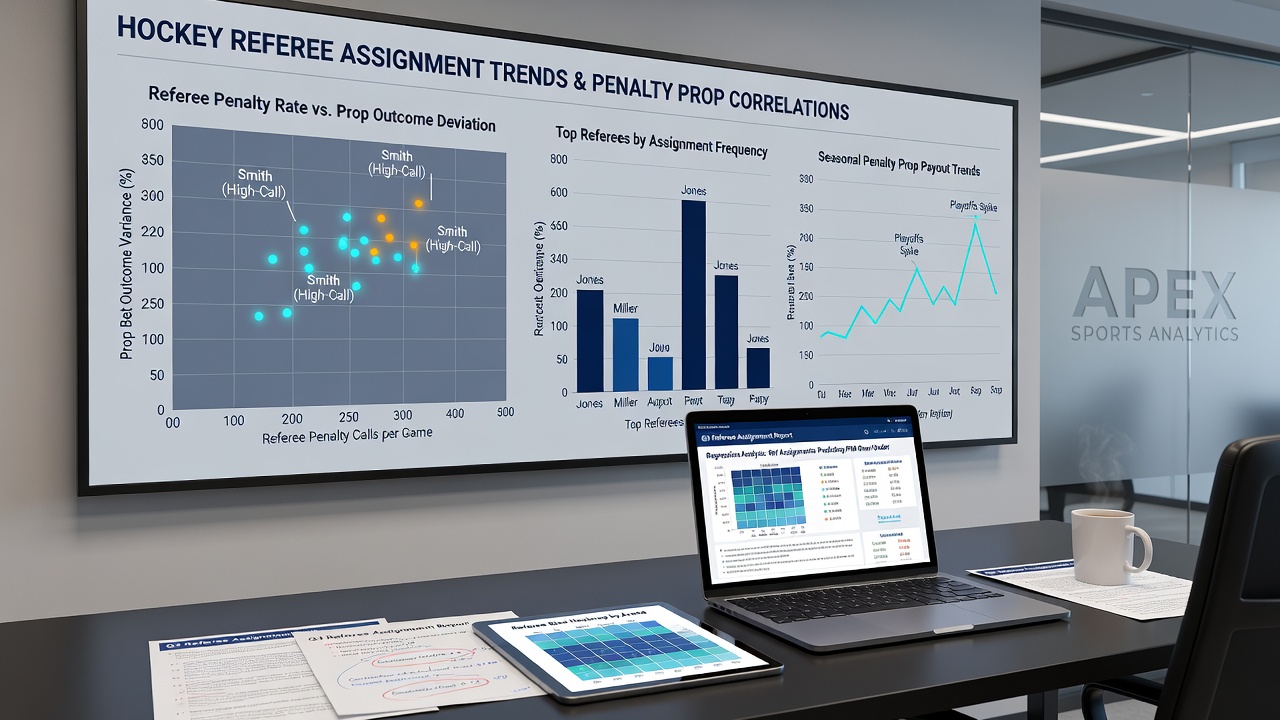
November 2026 schedules place several crews on extended road trips that coincide with divisional matchups known for physical play, and early returns from those games show elevated totals in props tied to those officials. Industry reports from gaming associations in multiple provinces note that betting interest in referee-specific props rises noticeably once the first 10 games of a referee's monthly slate become public.
Regional and Regulatory Context
Provincial gaming authorities in Canada publish aggregated wagering data that includes category breakdowns for hockey markets, and these disclosures reveal penalty props account for a growing share of total handle during the regular season. European sports betting regulators have begun similar reporting on international leagues that share officials with North American circuits, providing comparative datasets that analysts cross-reference when evaluating consistency across competitions. Academic papers from sports analytics programs at universities in both Canada and the United States examine referee assignment algorithms and their downstream effects on betting lines, with several studies identifying referee experience level as a stronger predictor than home-ice advantage alone.
Those who compile multi-season databases emphasize the importance of updating models each November when league schedules release detailed crew rotations, because subtle shifts in assignment philosophy can alter baseline expectations for entire months. Data shows that referees returning from injury or suspension often exhibit temporary changes in enforcement rates during their first five to seven games back, creating short-term edges for prop bettors who track such events.
Conclusion
Referee assignment trends supply quantifiable inputs that correlate with penalty prop outcomes, and market participants continue to integrate these datasets into their analysis frameworks. Ongoing collection of game-level statistics and regulatory disclosures will allow further refinement of models that connect officiating patterns to wagering results across future seasons.